Taipei Wins Global Biotech Hub Status
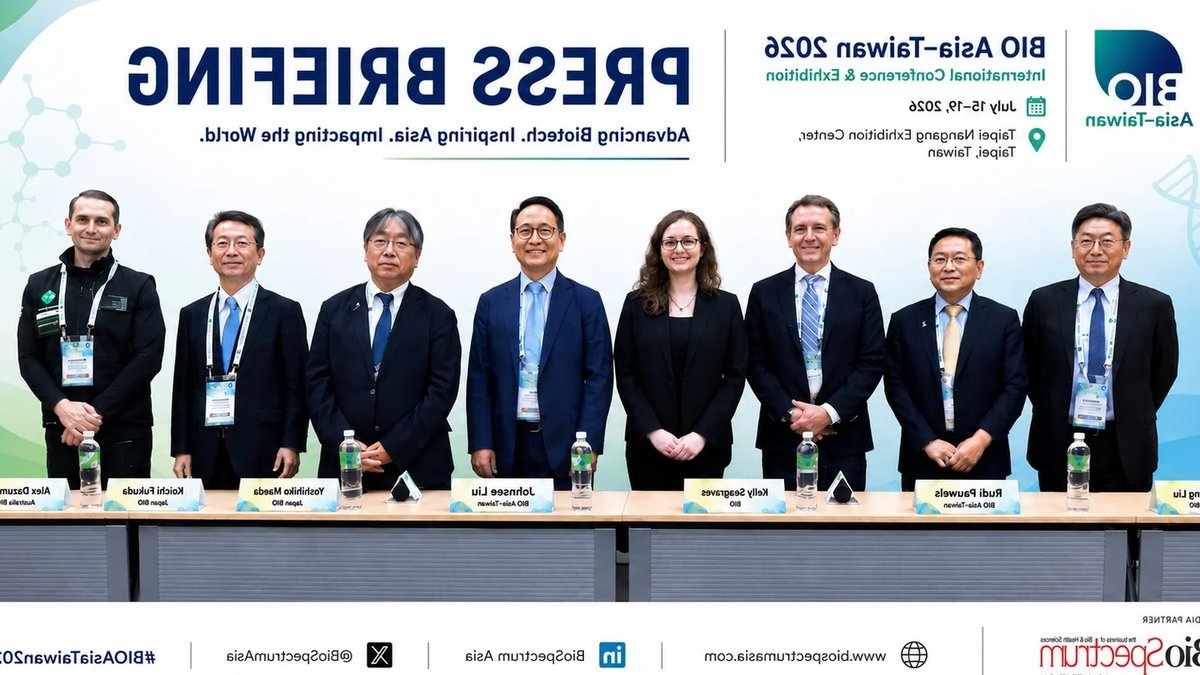
At the BIO Asia–Taiwan 2026 press meeting in Taipei, a steady stream of international voices converged on a single question: can the island reposition itself from a chip‑making hub to a biotech destination?
Hosts Let the Audience Speak
Johnsee Lee, chair of the event’s organizing committee, opened the session by stepping aside. Rather than outlining a program, he let the assembled press panel sit and listen. Lee‑Cheng Liu, head of the Taiwan Bio Industry Organization, added that a sector’s health is reflected not just in output but in who chooses to build alongside it. Their approach shifted focus from Taiwan’s past achievements to the caliber of attendees.
The decision to avoid a typical showcase of local milestones was deliberate. By highlighting the reputation of the visiting experts, the hosts implied that Taiwan’s biotech ecosystem had earned a place on the global stage without needing a sales pitch.
Related: Gulf Medical University opens new simulation hubs
AI, Manufacturing and Taiwan’s Edge
Alex Zhavoronkov, founder of Insilico Medicine, spoke on AI’s impact on drug discovery. He warned that speeding up early‑stage research merely moves the bottleneck downstream—toward manufacturing, capital, and regulatory hurdles. He noted that Taiwan’s long‑standing expertise in large‑scale execution aligns precisely with this shift.
“If the industry’s constraint is moving downstream toward manufacturing, precision and scale, Taiwan’s semiconductor inheritance stops being a charming irrelevance to its biotech story and starts being the point of it,” Zhavoronkov said. The comment highlighted how the island’s manufacturing pedigree could become a strategic asset for biotech firms seeking to translate discoveries into marketable therapies.
Rudi Pauwels, founder of the Praesens Foundation, framed Asia as the next major biotech investment hub. Drawing on his experience launching companies across diagnostics and genomics, he argued that capital is now flowing into the region with the intention to stay, rather than passing through on its way elsewhere. His perspective suggested a structural, not cyclical, realignment of investment.
Related: Physio for Lower Back Pain: A Comprehensive Guide
From a broader viewpoint, the convergence of AI, manufacturing capacity, and regulatory readiness illustrates why Taipei’s role matters. The island’s ability to integrate advanced chip design with biotech processes could accelerate the translation of laboratory breakthroughs into therapies, offering a competitive edge that extends beyond mere scientific merit.
Investors are taking notice.
The press meet did not feature a single argument about Taiwan itself. Instead, five independent speakers—an AI pioneer, a capital‑focused founder, a clinical expert, a manufacturing‑oriented entrepreneur, and a policy leader—each articulated a facet of the evolving biotech field. Their collective insight painted a picture of an industry moving toward precision, capacity, and partnership, with Taipei serving as the backdrop.
Related: Australian startup develops hormone sensor to streamline IVF
In practical terms, the shift means that companies developing new drugs will look for partners who can handle large‑scale production and handle complex regulatory environments. Taiwan’s existing semiconductor supply chain, combined with a growing biotech talent pool, positions it to meet those needs.
For investors, the message is clear: capital is no longer passing through Asia as a transit point. It is committing to the region, drawn by the promise of a cohesive ecosystem that can take a molecule from computer‑generated design to a commercially viable product.
As the morning concluded, the consensus was that the next decade of biotech will reward ecosystems capable of marrying discovery speed with manufacturing excellence. Taipei, with its blend of high‑tech manufacturing heritage and emerging biotech talent, appears poised to play a central role in that future.

Gulf Medical University opens new simulation hubs


