Africa regulator seeks broader health role
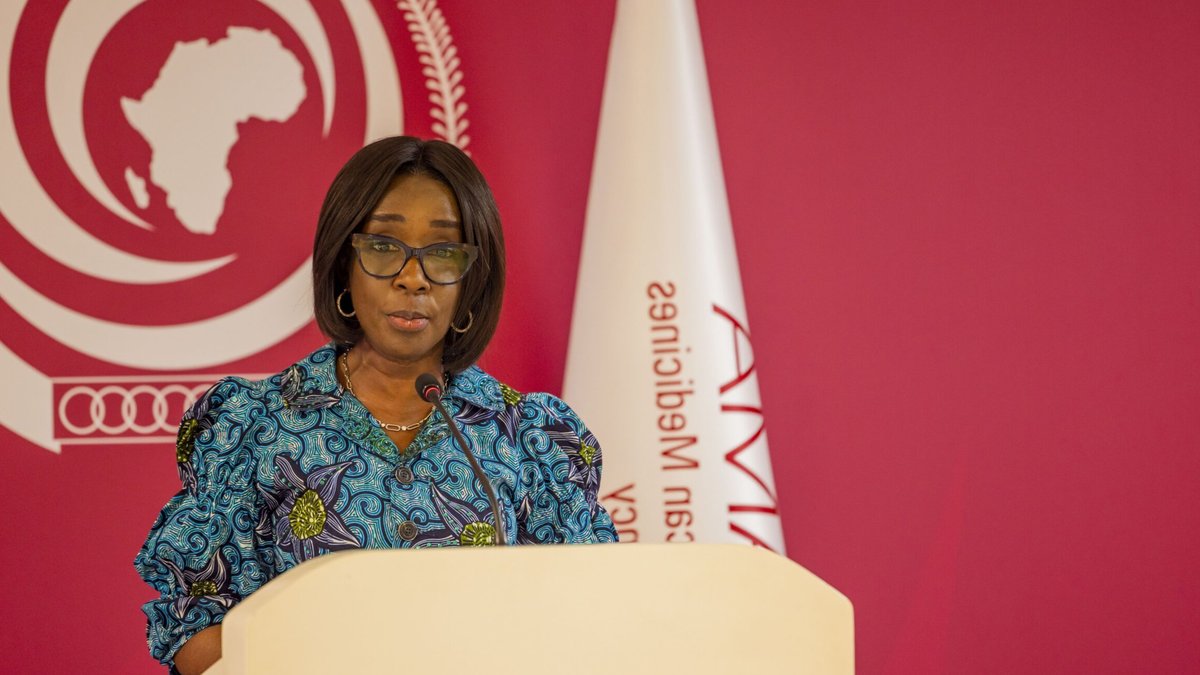
The African Medicines Agency (AMA) launched in Kigali in October 2025 to address a long-standing issue: inconsistent medicine regulation across 55 African Union member states.
Dr. Delese Mimi Darko, the agency’s first Director General, explained that the problem isn’t a shortage of expertise but how it’s structured. “AMA isn’t replacing any national agency,” she said. “It coordinates them to amplify their collective strength.”
Full participation requires all 55 member states to ratify the treaty. Currently, 33 have done so, leaving 22 still needed. Darko stated that a special envoy is visiting those nations to highlight the benefits of joining, noting that only ratified states can fully access AMA’s centralized approvals for vaccines and other essential products.
“For AMA to approve a new vaccine centrally, countries must be state parties,” she said. “That means signing and ratifying the treaty.”
National regulators still play a key role. After AMA approval, local agencies must verify quality, track safety, and manage distribution. “The product won’t stay in Kigali,” Darko said. “It will reach Nigeria, South Africa, or wherever it’s needed.”
Related: Cathedral Engagement Ring Settings Guide
The agency differs from existing systems like WHO’s collaborative registration or Swissmedic’s global health product authorizations. Darko emphasized that AMA is an African-led institution built around African regulators. “We’re creating a system where their expertise is used, and the outcome strengthens the continent’s regulatory capacity,” she said.
Most WHO prequalification experts are African, but coordination has been the missing piece. Initially, it relies on WHO maturity level three agencies as its foundation but also incorporates expertise from less-assessed regulators in areas like manufacturing inspections.
Some have compared AMA to the European Medicines Agency (EMA), which offers a single regulatory pathway for Europe. Darko said that’s the goal, but Africa’s legal and capacity differences make it more complicated. “AMA can’t yet function as a single channel for every country as some might expect,” she said.
Instead, the agency targets products where expertise varies widely—vaccines, complex treatments, and tools for diseases like malaria and tuberculosis. For simpler products such as antibiotics or paracetamol, national regulators may not need AMA’s involvement. The aim is to avoid duplicating 55 separate approval processes while still strengthening local oversight.
A single application could eventually serve the entire continent, but that depends on broad ratification. Darko cited the Bundibugyo Ebola outbreak as an example: “When the disease spreads, it doesn’t distinguish between ratified and non-ratified countries.” Without full participation, AMA’s effectiveness is limited.
Related: How Eating Disorders Can Affect Your Oral Health
Some of Africa’s largest economies, including South Africa, haven’t ratified. Darko explained this creates a dual problem: non-ratified countries miss out on AMA’s capacity-building, and the agency can’t tap into their expertise. “If South Africa manufactures a product for the continent, and it isn’t a ratified member, the benefits are mutual,” she said.
National regulators have also raised concerns about losing authority. Darko said AMA has addressed those worries by involving agency heads in strategy and IT planning. “We’re not operating without the agencies,” she said. “That has reassured many that they’re part of the process.”
For now, capacity-building is the top priority. Darko called it the only way to improve health security, clinical trials, and access to medical products. “Strong regulators mean faster product movement,” she said. “Safety and quality are properly monitored. Patients receive the right medication.”
The agency’s future success depends on convincing the remaining 22 countries to ratify and ensuring national regulators view it as a collaborator, not a replacement.

Ebola Response Falters While Courts Hinder Prevention


